Category Archives: Reading

My Russian tour

I’ve been taking an accidental course in Russian history. I started with The Family Romanov by Candace Fleming. It’s all about the last tsar of Russia and his family, muddling their way through a quickly changing political world. The book is wonderfully written, sort of a sweeping family saga except tragically true.

bk_romanov_140px

The Family Romanov served as the perfect appetizer for the what turned out to be the main course: Symphony for the City of the Dead, by M.T. Anderson. This is another (supposed) children’s book about Russian politics and history, all carefully woven around the life story of composer Dmitri Shostakovich.

Shostakovich was first loved by the Russian people, then targeted by the government and treated as a pariah, then loved once again. He survived the siege of Leningrad during World War II. The symphony he wrote while starving in his beloved city became an international symbol of hope and humanity.
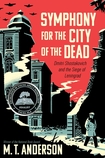
0763668184.med

The book was fascinating. My only issue is… it’s about a billion pages long. And it’s about Russian history. Are kids really going to read it? I devoured every possible book as a kid, but I can’t see my 13-year-old self choosing this one. And my daughter, avid reader that she is, didn’t make it through the more palatable Family Romanov.

What makes a non-fiction book a kid’s non-fiction book? That’s what I’ve been wondering, in between marvelling at the machinations of Russian politics. The prose in Symphony for the City of the Dead is clear and compelling… but shouldn’t that be a mark of good adult non-fiction as well? Anderson doesn’t assume the reader has prior knowledge of history, geography, or politics, and he offers plenty of background information… but wouldn’t more adults read Russian history if that were the case in all non-fiction books?

I have no real answers to these questions, except to say that both kids and adults should be choosing more non-fiction and these books are a wonderful place to start (for adults) and an impressive challenge (for younger readers).

I’m off to continue my Russian education with Stalin’s Daughter by Rosemary Sullivan. I’ll let you know how I do with my transition to actual grown-up biography.
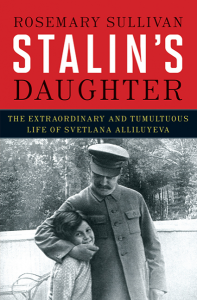
y648

Book 9-1-1

Homes in Vancouver are small. We don’t have endless space for bookshelves. And my husband doesn’t share my view that books make nice decorations on the kitchen counter, or that stacks of hardcovers can serve as perfectly good side tables.

The kids have shelves in their rooms, where books are stacked in double rows. I have a shelf in the family room similarly crammed, as well as a couple desk drawers, two bedside table drawers, and one stack beside my bedside table (which usually escapes spousal attention unless it teeters too high).

Still not enough. It never feels like enough, and I’m always having to give away books that I love.

Then, last night, a friend called with a book issue. Her son was sick. He’d been sleeping all afternoon but at 8:30 pm, was wide awake and looking for something to read. Unfortunately, he was right in the middle of Harry Potter and the Prisoner of Azkaban, and they’d forgotten their copy in Whistler on the weekend. Could I help?

I was so pleased to turn on my flashlight, sneak past my sleeping son, and withdraw the hardcover from the back row of his top shelf.

Even in a space-aware state, I’m still the person to call in a literary emergency.

Sighted in the wild

My daughter and I went exploring at the new Kidsbooks location. What a store! It’s absolutely stunning in there. I’m already planning to secretly move in, and hide my sleeping bag between the Star Wars books during the day.

I spotted DNA Detective in the non-fiction section. And no, I didn’t secretly turn it face-out.

It was already like that.

Really.

IMG_0596

Readings and lights

I visited Graham Bruce Elementary School in East Van yesterday, as part of a Books for Me! literacy program. The students had been studying DNA, so I told stories from DNA Detective, but I’m pretty sure a few of those kids knew more than me. When I paused for questions, someone asked about the effects of gamma radiation. And I said something super-smart, like, “uh…”

IMG_0583

They were a great group. Many thanks to Books for Me! and librarian Dee Mochrie for setting up the event. (You can always tell when a school has a great teacher-librarian at the helm!)

Just before the presentation, I scooted down the street to see a certain plaque at Sunrise Park. This week, the Vancouver Public Library and CWILL BC launched a program called Reading Lights. They’ve posted images from B.C. children’s books on street lights all over the city.

Just as I drove up to see the image from Deborah Hodge‘s Watch Me Grow!, the sun came out.

IMG_0582

Here’s her lovely plaque:

IMG_0581

It’s so fun to see these little bits of literature become part of the city landscape. You can check for plaques in your own neighbourhood here.

Saving the bees/schools/world

I’ve just finished reading The Summer We Saved the Bees, Robin Stevenson’s fun and quirky novel about an eco-extreme mom who sews costumes for her children and sets off across the country to do performance art, save the bees, and save the world. The book is narrated by the tween son, Wolf, who — though dedicated to the continued pollination of plants — would rather not appear in public dressed as an insect.

8348x

I loved the book, mostly because with just a small increase in my anxiety level, and a tiny decrease in my inhibitions, I could totally be that mom. I am one mild brain injury away from buying a camper van and setting off for the legislature to do performance art about seismically upgrading our schools. (None of which have had upgrades funded in the last six months, incidentally, because the province and the VSB are fighting again.)

Wouldn’t it be effective if we took all the kids at risk of being crushed by their schools and lined them up like dead bodies on the legislature lawn?

But… um… yes. I do realize the issues with that, and don’t really want to petrify and/or mortify my children, and therefore will not be enlisting them as performance artists anytime soon.

But here’s to all the moms who desperately want to save the bees/schools/world in any way possible.

The book’s a fantastic read, even if you’re not as neurotic as I am.

Neighbourhood watch

I’m baking cookies for the neighbours.

Earlier this week, Min was bravely coaching soccer in the pouring rain. Two parents failed to show up to collect their sons, so he stood in the rain a little longer than usual. Meanwhile, our house alarm had gone off. We have a security company that’s supposed to show up within five minutes, but it seems they were a little slow on this particular evening and our neighbours from both sides turned up to check the doors and windows and scout the backyard.

And where was I during all this chaos?

In a coffee shop, enjoying my book.

See, I was in charge of driving my daughter and her friend to soccer that night, but I don’t actually know how to play soccer, and it was raining, and the coffee shop down the street seemed so quiet and inviting…

I am not very helpful in a crisis. But I do make good cookies, and hopefully they will make up for everything.

The reading tally

I was SO CLOSE to my 75-book goal for last year. I tried a final sprint to the finish line, but then the kids were off school and snowshoeing called and… 73.

It’s really all Naomi Klein‘s fault. (Though she was worth it.)

I read 12 non-fiction books. The ones with the biggest impact were This Changes Everything and Elizabeth Gilbert’s Big Magic. I read the two at the same time, and it was a nice balance. That is to say, Big Magic kept me from jumping off a cliff while I struggled through This Changes Everything.

Other non-fiction books I loved: Glenn Greenwald’s No Place to Hide, about Edward Snowden; Caroline Moorehead’s Village of Secrets, about a tiny region in France that sheltered Jewish refugees during World War II; and Katherine Boo’s Behind the Beautiful Forevers, about a community in the slums of Mumbai. All amazing books, well worth any reading-goal delays.

bbf

In the world of adult fiction (20 books), I loved Anthony Doerr’s All the Light We Cannot See. If you haven’t read it, you should get a copy immediately.

light

The rest of my books were middle-grade and young adult fiction (41). And I have so many favourites in that category, it’s hard to choose. Andrew Smith’s Grasshopper Jungle, definitely, because of its wonderful mash-up of realistic romance and inventive sci-fi. Also Jonathan Auxier’s The Night Gardener (deliciously creepy) and Rebecca Stead’s Goodbye Stranger (contemporary perfection). For the younger set, I choose Jordan Stratford’s The Case of the Missing Moonstone, which made me wish I lived in London in the early 1800s. In a house with a maid, a butler, and a hot-air balloon.

moonstone

I’ve been reading up a storm these last few weeks. My tracking website predicts I’ll hit 123 books this year. But let’s keep our expectations realisttic and say 74, shall we? If you have recommendations for me, leave me a comment.

My reading friends, may every rainy day in 2016 find you curled on a window seat with a cup of tea and the perfect book.

The Christmas list

I realize that little ones aren’t usually my department, but I’ve read three brilliant books lately and I thought I’d share. Just in case you have Christmas shopping still to do…

When Santa Was A Baby
By Linda Bailey
Illustrated by Geneviève Godbout
Sweet and funny, and the kind of holiday book you can read over and over to your kid without throwing up. (A category smaller than one might think.) As a baby and then as a young child, Santa shows some unique traits — a love of chimneys, for example, and a passion for building toys. His parents make all sorts of guesses for his future. They’re wrong, of course, but the fact that the reader knows more than Santa’s parents is part of the fun.

Santa

Bug in a Vacuum
By Melanie Watt
Again, a picture book that’s designed just as much for the parent as it is for the preschooler. This poor housefly sucked into the vacuum cleaner goes through each of the Kübler-Ross stages of grief before achieving paradise. Which sounds rather awful when I put it like that, but the book is hilarious. Trust me.

bugvacuum

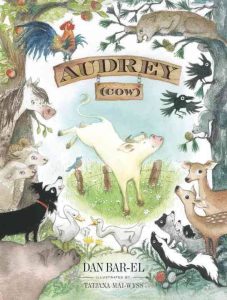
Audrey (Cow)
By Dan Bar-el
In this chapter book, Audrey learns about her upcoming trip to the slaughterhouse and, with the help of her farmyard friends, hatches a plan to save herself. But that’s beside the point. The book is funny and wise and the sort of story that could solve all the world’s problems if only everyone would read it. So not only should you buy it for your favourite elementary-school student, you should also buy it for your great uncle who says the UN should build a wall around Syria, and for your aunt who starts every sentence with “I’m not one to gossip, but…” And then you should buy an extra copy for yourself. It’s that good.

audrey

Happy shopping!

This Changes Everything

I’m behind on my 75-book reading goal for the year, and it’s all Naomi Klein’s fault. I read This Changes Everything, and it took me forever to get through it.

It took so long because (a) Naomi Klein books read like gluten-free bread, dense and chewy, but probably good for you; (b) because she packs an encyclopedia’s worth of research into every chapter; and (c) because I kept collapsing onto my bed like a suicidal slug after every second page.

CAN_paperbackcover-198x300

Min thought I was getting sick for a while, because he kept finding me in my slug-like state and I didn’t want to admit I was reading this particular book because I knew he would suggest that I, say, STOP READING and thus stop feeling so defeated. But, I’d heard that the second half of the book was more hopeful than the first, and I felt that if a brilliant thinker like Naomi Klein could dedicate years of her life to researching climate change, the least I could do was read her work. Oh, and maybe stop driving my car.

I will summarize the first half of the book for you, in case you don’t have access to antidepressants and thus can’t read it yourself. It says: Hell + Handbasket.

Also, there are a lot of scary deadlines. Like, RIGHT NOW. Stop oil subsidies, divest, create local economies, end globalization, develop renewable energy sources, and get crackin’ THIS AFTERNOON. Tomorrow morning’s too late.

Plus, if you drive a car, you would have owned slaves if you lived a couple hundred years ago.

(Yeesh, even the summary of this stuff is a big sack of suck.)

Okay, onto the second half. By continuing to pillage with wanton disregard for people and the environment, oil companies have lost their social licence to operate. There are grassroots movements around the world mobilizing against these companies, and against the governments (including ours) that have been corrupted by oil money.

So that’s more hopeful.

And I have to say, having finished the book, I’m now reading the news differently. It’s as if every protest and petition is one more step in a global movement toward greater equality and sustainability.

At least, I hope it each protest is another step. Because otherwise, I’m the slug that’s stuck inside the handbasket, and I now know exactly where I’m heading.

(Incidentally, there’s a lovely article by one of my favourite activist-writers, Tzeporeh Berman, posted on the National Observer site this week, which offers us Canadians reason to hope.)

Vancouver Writers Fest!!!

Let me apologize now for the three exclamation marks in the title of this post. But… the Vancouver Writers Fest!!! (Oops… did it again. Sorry.)

I’m so excited to be a part of the festival this year. And, as the catalogue has just arrived in my mailbox, it must be time to share a little news about my presentations.

DNA Detective
Wednesday, October 21, 10 – 11:15 a.m.
In this DNA Detective talk for students in grades 5 through 8, I tell stories about the deranged and obsessed people who figured out how DNA actually works. (One of them drank hydrochloric acid.) We explore the wild and wacky side of DNA mishaps, cloning, and woolly-mammoth reconstruction, consider the pros and cons of glowing goldfish, and wonder how Icelanders avoid marrying their cousins.

Against All Odds
Wednesday, October 21, 1 – 2:30 p.m.
This is a panel discussion with Michel Chikwanine, moderated by Shannon Ozirny. Michel was kidnapped by rebel Congolese soldiers when he was five, taken to the jungle, and trained as a child soldier. I am… providing comic relief? Because the closest I’ve come to a survival situation was Metrotown Mall on Boxing Day. BUT, I did write When the Worst Happens, which is all about how our body and brain handle crisis situations, how to control panic and take action, and how to survive just about anything. Except maybe rebel Congolese soldiers. (I may simply stare at Michel in awe during this hour. But you can join me.)

There are many more events that I’m dying to attend, so hopefully I’ll see you on Granville Island in October! (There. I’m down to one exclamation mark. How sedate of me.)