Category Archives: Writing

Whirlwinds

It’s been a busy few days, and I’ve barely had time to think connected thoughts. But rather than leaving the blog to drift any longer, I decided to share some of my disconnected thoughts.

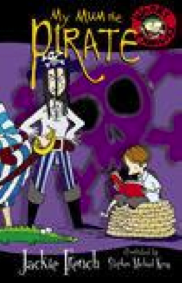
1. I just read my headachy son half of My Mom the Pirate, and guess what the mom’s name turned out to be? Tanya the Terrible! Shiver me timbers. I’m going to talk pirate-speak for the rest of the day. (That’s really going to help with the connected thoughts thing…)
Screen Shot 2014-04-30 at 10.34.42 AM

2. I sent the first draft of my latest non-fiction manuscript to the editor about ten days ago and she’s SENT IT BACK ALREADY! This is entirely unfair, in my opinion. I should get at least three weeks to rest my brain. Her comments are both brief and reasonable, and she’s a lovely, funny editor, so I’m trying to find it in my heart to forgive her efficiency. Then I can start work on the edits…

3. My publisher has a real-life copy of When the Worst Happens in her office at this very moment. The book’s not out until September and the rest of the copies are on a ship somewhere between Asia and here, but she has an advance sample. Tomorrow I get to pretend to be glamorous and head downtown for lunch to see said copy and said publisher. Usually these lunches are full of news about what other writers are planning and I arrive having sworn to work on nothing new for six months, then leave with my head awhirl in ideas.

Screen Shot 2014-03-12 at 10.34.43 AM

Just what I need… my head awhirl.

All good things, at least! Now I’m — hoist the mast, mateys! — off to talk like a pirate again.
Best of the worst

Drum roll, please! Here’s my newest non-fiction title, to be released this fall by Annick Press:

Screen Shot 2014-03-12 at 10.34.43 AM

When the Worst Happens is about crazy situations, and how some people manage to survive them. It explores the ways our bodies respond to emergencies, the ways our brains function (or fail to function) under duress, and the different ways individuals and groups cope with crises.

Of all the non-fiction books I’ve worked on, this has been my absolute favourite. Maybe because as a generally paranoid person, I had plenty of questions about how best to survive a disaster. When The Worst Happens gave me the perfect excuse to research my deepest fears. (Among other things, I discovered that air travel really is safe. Even when planes crash, almost everyone escapes safely. Working in hundred-year-old mines, on the other hand… not recommended.)

When I created the proposal for this book, I suggested a chapter about Arctic misadventures, a chapter about desert disasters, etc. The information about the psychology of survival was to be included in bits and pieces. But then editor extraordinaire Alison Kooistra stepped in and created a spreadsheet (really) showing how the book could be organized around psychologic themes, with four main stories told in chunks scattered throughout. So, readers could skip pages to follow the stories one at a time, OR read the chapters in order to learn about human reactions. Genius, right? And all I had to do was figure out how to read a spreadsheet.

The book also has fantastic illustrations (in my wholly unbiased opinion) by David Parkins, and my favourite graphic design ever.

I’m a wee bit excited. Feel free to join me in my ongoing happy dance. The book’s due out this fall!

Desperately seeking silence

I made it through twelve days of spring break as an attentive, involved mother. I played card games and board games, travelled cheerfully, led adventures, and bought treats.

On the afternoon of the thirteenth day, I curled up in a small ball with a good book and refused to make dinner. (It’s fortunate I’m not a single parent.)

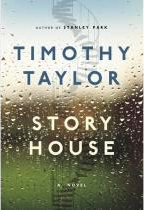
The book, incidentally, was Story House. I love when a book makes you think, “how does the writer know all that stuff?” In this case, Timothy Taylor appears to be a genius of architecture, boxing, sport fishing, molecular gastronomy, and, most impressively, counterfeiting.

Screen Shot 2014-03-29 at 8.29.21 PM

It’s not an easy read (take that with a grain of salt, since I spend much of my time reading children’s books), but a thoroughly fascinating one.

With the book finished, Day 14 of spring break was successfully navigated. I have now recovered my sanity and given up my Julie McCoy act, at least until summer strikes.

Screen Shot 2014-03-29 at 8.29.02 PM

Onwards to my own work…

Laptopless

I left my laptop at home last week when we went to Whidbey.

I know.

I can barely believe it myself. But I took along a notebook instead, and found it surprisingly pleasant and productive.

Here are my three favourite things about writing by hand:

1. No one knows you’re working. There were no remonstrating looks from husband or children. No complaints. No requests to use my notebook for games or googling, which would have happened immediately if I were working on a laptop.

2. I didn’t feel like I was working. And often, I wasn’t. Sometimes I was scribbling ideas for blog post, and sometimes I was copying recipes from an ancient copy of The Moosewood Cookbook, because they reminded me of my vegetarian university years (when that cookbook was considered the epitome of exotic). And sometimes, just sometimes, I was writing entire scenes for my work-in-progress.

3. I wasn’t worried about writing trash. I’m right in the muddy middle of a project, and the weight of all the written scenes combined with the still-to-write scenes is a terrible mix of crushing and confusing. But in a notebook, I can write paragraphs or pages and not worry where they might fit or connect. If they don’t work, I won’t type them!

Along with my beach photos and Port Townsend loot, I’ve left Whidbey with a resolution: to sometimes head to the coffee shop with a pen instead of a keyboard for company.

Link

One of the best things about staying in a guest house instead of a hotel is the shelf of books that’s always waiting to be explored, complete with trashy romances or experimental poetry or self-help for alcoholics. And no matter what books I’ve brought with me, I always find myself abandoning them for the trash or the poetry or… well, not the twelve-step guides. But everything else!

Here’s the odd collection I went through on Whidbey Island last week:

The Diviners, by Libba Bray, which was fantastic (of course, because who doesn’t love Libba Bray?), but too scary for me. I had to read it in daylight hours only.

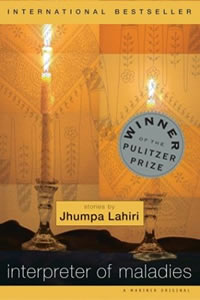
The Interpreter of Maladies, by Jhumpa Lahiri. I don’t usually read short stories. I don’t like how they leave me hanging just after I’ve fallen in love with the characters. And this book is full of the worst kind of frustration, precisely because the stories are so good and I fell so thoroughly in love. I’d happily read a novel based on any one of these tales.

Interpreterofmaladiescover

Better Nate Than Ever, by Tim Federle. I read this at the insistence of my nine-year-old, who was whipping through books faster than I was. It was a silly, sweet, and heart-squeezing story. (My daughter picked this one up from her school library, where the librarian now lets her rummage through the new books before they’re even shelved. I have obviously done well teaching her life’s most important lesson: make friends with your librarian.)

Dr. Bird’s Advice for Sad Poets, by Evan Roskos. Is this not the best title ever? And I loved the main character in this book, in all his anxious navel-gazing.

Because of Winn-Dixie, by Kate DiCamillo. Last week’s guest house had not only a grown-ups’ bookshelf, but a kids’ one as well. That’s where my daughter found this gem, which I read on our last night away. It was a candy box of perfectly linked stories and characters, tied up with a mildly magical ribbon. A perfect way to end the reading trip!

Dirty dinner

I had dinner on Sunday with the Dirty Girls Running Group Which Doesn’t Actually Run, a collection of 7 treasured friends. (Plus a guest appearance by the daughter of one, so make that 7 1/2 friends). One of the Dirties is giving a talk at TedExWestVancouverED in September, and we are inordinately proud of her.

I suggested that we put it on our collective to-do list. After all, these are some of the most brilliant, fun, and fascinating women in my life. We should all get ourselves invited to give a TED talk at some point.

“What would you talk about?” my friend Joanna asked me. (As an expert in resilient food systems,  she wouldn’t have a problem. She could also illustrate her own talk.)

I thought for a moment. A long moment. “Punctuation?”

Oh my.

If you’ll excuse me, I have to run. I have to become an expert in something amazing, asap. Preferably something which lends itself to engaging visual aids.

Display dreams

My agent e-mailed last week and mentioned this:

I’ve been to three different Indigo stores recently and each one had a table with a sign that said “Your Favourite Teen Reads” and Anywhere But Here was prominently placed. Right beside John Green’s The Fault in Our Stars!

I headed straight for Chapters, of course, because if this were true then all my dreams would have been fulfilled and I could have stopped writing forever.

Unfortunately, it was not right beside The Fault in Our Stars at the local store. But it was prominently displayed and among great company. So… semi-retirement?

chapters

Books and zombies

I had a fantastic afternoon at Strathcona Elementary yesterday, where I spoke to two groups of thoroughly enthusiastic students. They had some suggestions for my next non-fiction topic:

1. The apocalypse.

2. Dumb ways the world might end.

3. Zombies.

(Are you seeing a theme here? Well, wait until you hear the fourth suggestion…)

4. Hamsters.

Unfortunately, I  had coffee with a virologist last weekend and he assured me that there is absolutely zero possibility of a  virus turning humans into flesh-eating monsters. So, there will be no non-fiction zombie apocalypse project. But maybe a zombie hamster chapter book? Hmmmm….

A big thank you to the staff and students at Strathcona for making me feel so welcome!

Karma bites

When writer Deryn Collier tweeted a few weeks ago about needing an office so she could escape her laundry, I was oh-so-superior about the idea. I embrace the laundry as my chance to ponder the mysteries of the universe. I think that’s basically what I said in this ridiculous blog post.

Well, friends, karma has given me a big fat kick in the butt.

My dishwasher broke over a week ago and I am NOT ZEN about doing approximately one billion dishes every day. Breakfast dishes, lunch dishes, snack dishes, dinner dishes, and those DISGUSTING dishes that have sat in lunch boxes all day (if you’re lucky) or in cubbies all week (if you have children like mine).

The original installer from Future Shop called to arrange a time LATE THIS WEEK (?!?) and I had what I thought was a rather restrained version of a conniption. He hung up on me. The second installer from Future Shop, who is either wiser or more used to dishwashing angst, is arriving today.

If he doesn’t, I’m renting an office. And I’m going to sleep and eat there, by myself, and clean my dishes by licking them.

The perfect couple

One of the (offensive) pieces of advice often given to young (female) writers is this: marry rich. As someone who did happen to marry a man in a far more lucrative profession, I admit it’s entirely useful. But it’s also (a) blatantly unfair that society places so little monetary value on the arts, (b) not a situation to accept lightly, and (c) certainly not a valid career plan.

I DO have an opinion on the ideal match for a writer, though. Writers should marry extroverts.

Most of us spend hours a day communing with our notebooks or laptops, and blinking half-focussed owl eyes when another human being attempts to communicate. At writing workshops or conferences, the first half hour is often silent, as people file in one-by-one and pretend to busy themselves because they’re not sure how to begin conversations with strangers. It’s excruciating, really.

Far more than I value Min’s earning potential, I value his confidence. I can take him to an event, choose anyone in the room, and say, “I’d like to meet that person.” Within minutes, Min’s introduced us, cracked a few semi-inappropriate jokes, and made everyone feel comfortable.

I had coffee with Deborah Hodge last week, and we talked about this phenomenon. She, too, married an extrovert. We agreed that not only do you benefit from extroverts in social situations, you also learn from them. Having lived with gregarious husbands, we’re both more likely to introduce ourselves to strangers and reach out during those silent, awkward moments. (Still working on the inappropriate joke part.)

So there it is. Marry rich if you want to. But it’s better to marry an extravert.

(While I’m talking about Deborah Hodge, you MUST read Rescuing the Children. With a box of tissues close at hand. It’s a poignant and thoughtful book about a time and place where families made choices now difficult to imagine.)

rescuing